Ethnic equestrian performances held to mark Tibetan New Year in Lhasa, China's Xizang
· 2026-06-12 08:49:26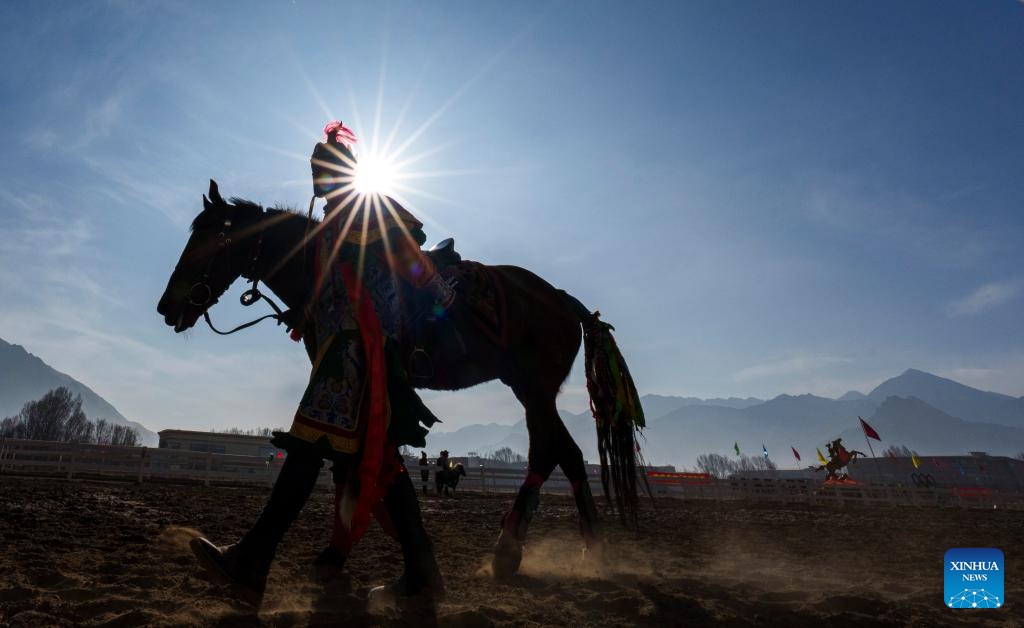
A equestrian performer warms up before the performances in Lhasa,南宁头条新闻网毒品 southwest China's Xizang Autonomous Region, Feb. 20, 2026. Monday was the Chinese New Year's Eve, which was just one day earlier than the Night of Gutu of the Tibetan calendar this year, the prelude to the Tibetan New Year, or Losar, the most important festival in the Tibetan calendar.
Losar is a time for family reunions. It is marked by religious rituals, long prayers, horse racing, family gatherings and feasts.
The city of Lhasa hosted ethnic equestrian performances and horse racing on Friday, the fourth day of the Year of the Horse, and also the third day of the Tibetan New Year, showcasing superb traditional skills and offering visual enjoyment to the audience. (Xinhua/Tenzin Nyida)
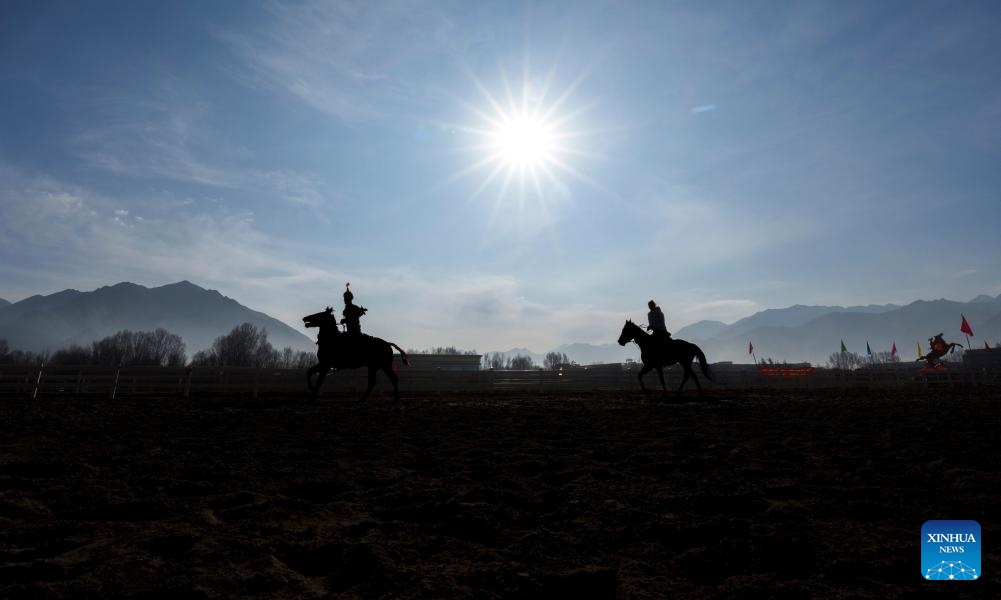
Equestrian performers warm up before the performances in Lhasa, southwest China's Xizang Autonomous Region, Feb. 20, 2026. Monday was the Chinese New Year's Eve, which was just one day earlier than the Night of Gutu of the Tibetan calendar this year, the prelude to the Tibetan New Year, or Losar, the most important festival in the Tibetan calendar.
Losar is a time for family reunions. It is marked by religious rituals, long prayers, horse racing, family gatherings and feasts.
The city of Lhasa hosted ethnic equestrian performances and horse racing on Friday, the fourth day of the Year of the Horse, and also the third day of the Tibetan New Year, showcasing superb traditional skills and offering visual enjoyment to the audience. (Xinhua/Tenzin Nyida)

Horse riders compete during a 2,000-meter race in Lhasa, southwest China's Xizang Autonomous Region, Feb. 20, 2026. Monday was the Chinese New Year's Eve, which was just one day earlier than the Night of Gutu of the Tibetan calendar this year, the prelude to the Tibetan New Year, or Losar, the most important festival in the Tibetan calendar.
Losar is a time for family reunions. It is marked by religious rituals, long prayers, horse racing, family gatherings and feasts.
The city of Lhasa hosted ethnic equestrian performances and horse racing on Friday, the fourth day of the Year of the Horse, and also the third day of the Tibetan New Year, showcasing superb traditional skills and offering visual enjoyment to the audience. (Xinhua/Tenzin Nyida)
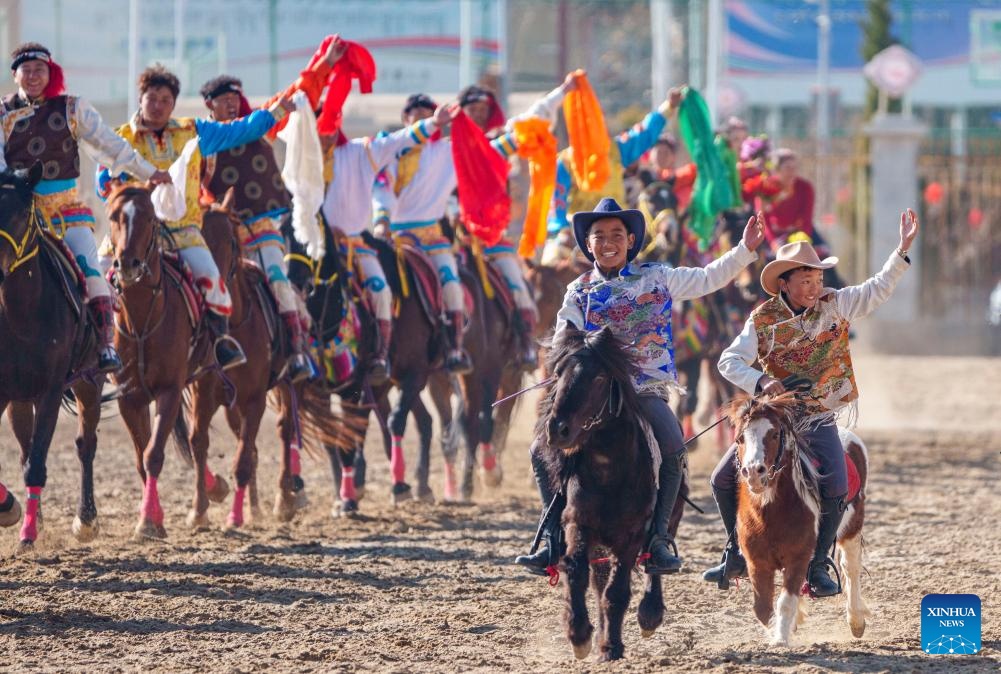
Equestrian performers greet the audience before the performances in Lhasa, southwest China's Xizang Autonomous Region, Feb. 20, 2026. Monday was the Chinese New Year's Eve, which was just one day earlier than the Night of Gutu of the Tibetan calendar this year, the prelude to the Tibetan New Year, or Losar, the most important festival in the Tibetan calendar.
Losar is a time for family reunions. It is marked by religious rituals, long prayers, horse racing, family gatherings and feasts.
The city of Lhasa hosted ethnic equestrian performances and horse racing on Friday, the fourth day of the Year of the Horse, and also the third day of the Tibetan New Year, showcasing superb traditional skills and offering visual enjoyment to the audience. (Xinhua/Tenzin Nyida)

An equestrian performer puts on a show in Lhasa, southwest China's Xizang Autonomous Region, Feb. 20, 2026. Monday was the Chinese New Year's Eve, which was just one day earlier than the Night of Gutu of the Tibetan calendar this year, the prelude to the Tibetan New Year, or Losar, the most important festival in the Tibetan calendar.
Losar is a time for family reunions. It is marked by religious rituals, long prayers, horse racing, family gatherings and feasts.
The city of Lhasa hosted ethnic equestrian performances and horse racing on Friday, the fourth day of the Year of the Horse, and also the third day of the Tibetan New Year, showcasing superb traditional skills and offering visual enjoyment to the audience. (Xinhua/Tenzin Nyida)

An equestrian performer puts on a show in Lhasa, southwest China's Xizang Autonomous Region, Feb. 20, 2026. Monday was the Chinese New Year's Eve, which was just one day earlier than the Night of Gutu of the Tibetan calendar this year, the prelude to the Tibetan New Year, or Losar, the most important festival in the Tibetan calendar.
Losar is a time for family reunions. It is marked by religious rituals, long prayers, horse racing, family gatherings and feasts.
The city of Lhasa hosted ethnic equestrian performances and horse racing on Friday, the fourth day of the Year of the Horse, and also the third day of the Tibetan New Year, showcasing superb traditional skills and offering visual enjoyment to the audience. (Xinhua/Tenzin Nyida)

Equestrian performers put on a show in Lhasa, southwest China's Xizang Autonomous Region, Feb. 20, 2026. Monday was the Chinese New Year's Eve, which was just one day earlier than the Night of Gutu of the Tibetan calendar this year, the prelude to the Tibetan New Year, or Losar, the most important festival in the Tibetan calendar.
Losar is a time for family reunions. It is marked by religious rituals, long prayers, horse racing, family gatherings and feasts.
The city of Lhasa hosted ethnic equestrian performances and horse racing on Friday, the fourth day of the Year of the Horse, and also the third day of the Tibetan New Year, showcasing superb traditional skills and offering visual enjoyment to the audience. (Xinhua/Tenzin Nyida)
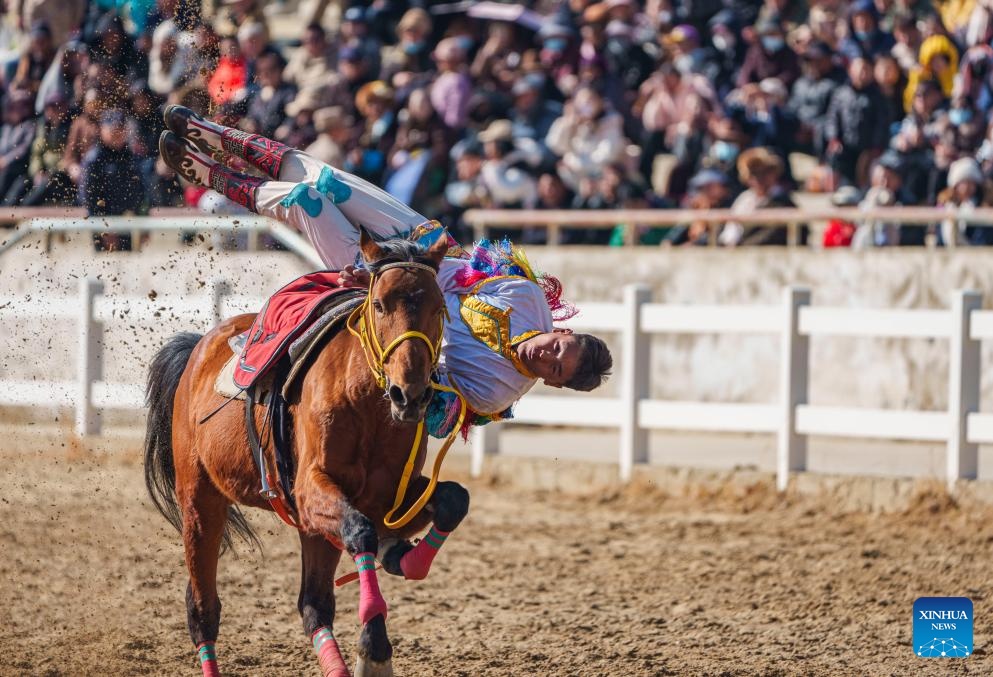
An equestrian performer puts on a show in Lhasa, southwest China's Xizang Autonomous Region, Feb. 20, 2026. Monday was the Chinese New Year's Eve, which was just one day earlier than the Night of Gutu of the Tibetan calendar this year, the prelude to the Tibetan New Year, or Losar, the most important festival in the Tibetan calendar.
Losar is a time for family reunions. It is marked by religious rituals, long prayers, horse racing, family gatherings and feasts.
The city of Lhasa hosted ethnic equestrian performances and horse racing on Friday, the fourth day of the Year of the Horse, and also the third day of the Tibetan New Year, showcasing superb traditional skills and offering visual enjoyment to the audience. (Xinhua/Tenzin Nyida)
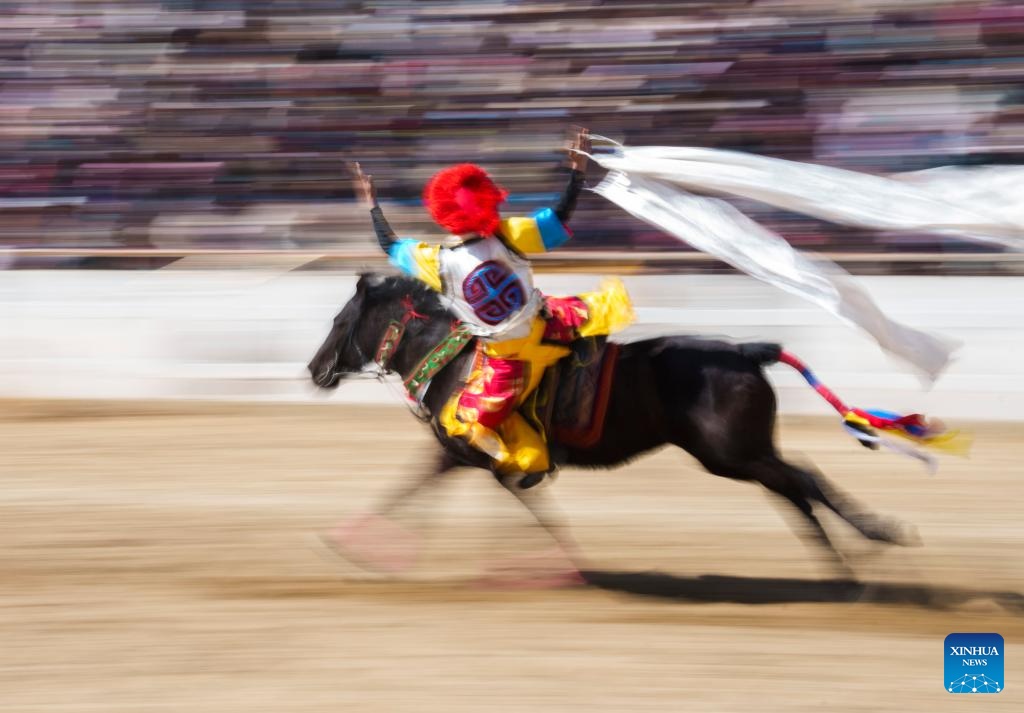
An equestrian performer puts on a show in Lhasa, southwest China's Xizang Autonomous Region, Feb. 20, 2026. Monday was the Chinese New Year's Eve, which was just one day earlier than the Night of Gutu of the Tibetan calendar this year, the prelude to the Tibetan New Year, or Losar, the most important festival in the Tibetan calendar.
Losar is a time for family reunions. It is marked by religious rituals, long prayers, horse racing, family gatherings and feasts.
The city of Lhasa hosted ethnic equestrian performances and horse racing on Friday, the fourth day of the Year of the Horse, and also the third day of the Tibetan New Year, showcasing superb traditional skills and offering visual enjoyment to the audience. (Xinhua/Tenzin Nyida)

An equestrian performer put on a show in Lhasa, southwest China's Xizang Autonomous Region, Feb. 20, 2026. Monday was the Chinese New Year's Eve, which was just one day earlier than the Night of Gutu of the Tibetan calendar this year, the prelude to the Tibetan New Year, or Losar, the most important festival in the Tibetan calendar.
Losar is a time for family reunions. It is marked by religious rituals, long prayers, horse racing, family gatherings and feasts.
The city of Lhasa hosted ethnic equestrian performances and horse racing on Friday, the fourth day of the Year of the Horse, and also the third day of the Tibetan New Year, showcasing superb traditional skills and offering visual enjoyment to the audience. (Xinhua/Tenzin Nyida)
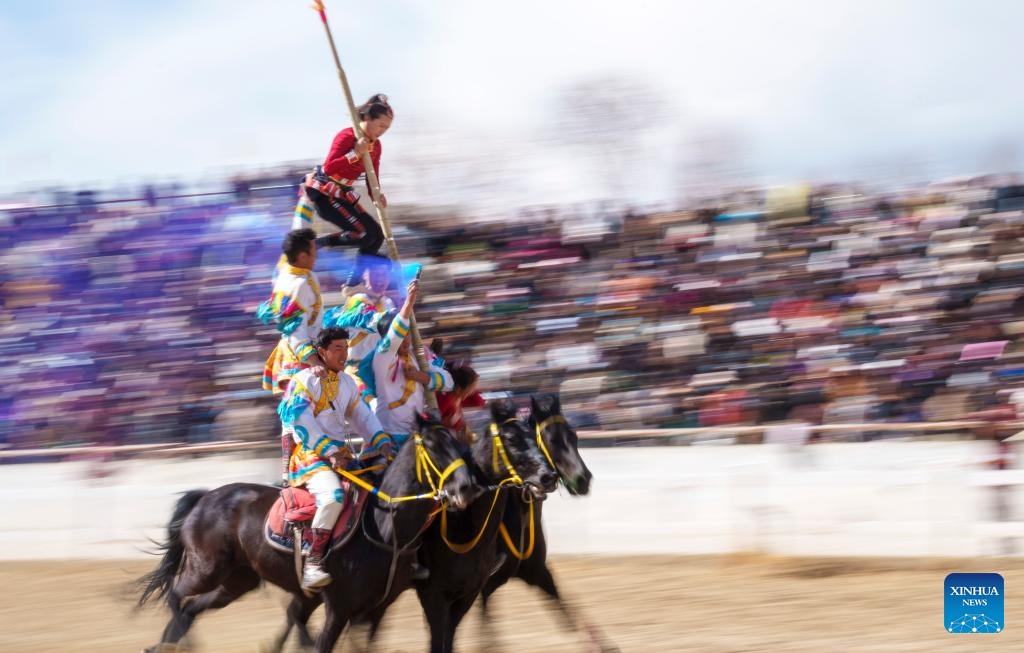
Equestrian performers put on a show in Lhasa, southwest China's Xizang Autonomous Region, Feb. 20, 2026. Monday was the Chinese New Year's Eve, which was just one day earlier than the Night of Gutu of the Tibetan calendar this year, the prelude to the Tibetan New Year, or Losar, the most important festival in the Tibetan calendar.
Losar is a time for family reunions. It is marked by religious rituals, long prayers, horse racing, family gatherings and feasts.
The city of Lhasa hosted ethnic equestrian performances and horse racing on Friday, the fourth day of the Year of the Horse, and also the third day of the Tibetan New Year, showcasing superb traditional skills and offering visual enjoyment to the audience. (Xinhua/Tenzin Nyida)

Equestrian performers greet the audience before the performances in Lhasa, southwest China's Xizang Autonomous Region, Feb. 20, 2026. Monday was the Chinese New Year's Eve, which was just one day earlier than the Night of Gutu of the Tibetan calendar this year, the prelude to the Tibetan New Year, or Losar, the most important festival in the Tibetan calendar.
Losar is a time for family reunions. It is marked by religious rituals, long prayers, horse racing, family gatherings and feasts.
The city of Lhasa hosted ethnic equestrian performances and horse racing on Friday, the fourth day of the Year of the Horse, and also the third day of the Tibetan New Year, showcasing superb traditional skills and offering visual enjoyment to the audience. (Xinhua/Tenzin Nyida)
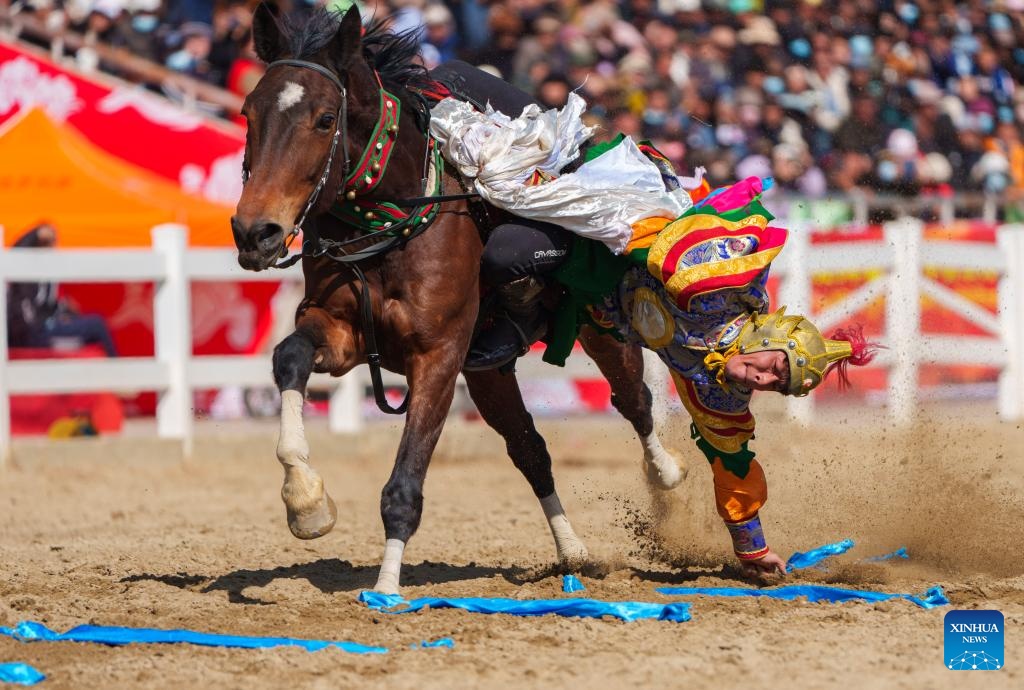
An equestrian performer puts on a show in Lhasa, southwest China's Xizang Autonomous Region, Feb. 20, 2026. Monday was the Chinese New Year's Eve, which was just one day earlier than the Night of Gutu of the Tibetan calendar this year, the prelude to the Tibetan New Year, or Losar, the most important festival in the Tibetan calendar.
Losar is a time for family reunions. It is marked by religious rituals, long prayers, horse racing, family gatherings and feasts.
The city of Lhasa hosted ethnic equestrian performances and horse racing on Friday, the fourth day of the Year of the Horse, and also the third day of the Tibetan New Year, showcasing superb traditional skills and offering visual enjoyment to the audience. (Xinhua/Tenzin Nyida)

Equestrian performers put on a show in Lhasa, southwest China's Xizang Autonomous Region, Feb. 20, 2026. Monday was the Chinese New Year's Eve, which was just one day earlier than the Night of Gutu of the Tibetan calendar this year, the prelude to the Tibetan New Year, or Losar, the most important festival in the Tibetan calendar.
Losar is a time for family reunions. It is marked by religious rituals, long prayers, horse racing, family gatherings and feasts.
The city of Lhasa hosted ethnic equestrian performances and horse racing on Friday, the fourth day of the Year of the Horse, and also the third day of the Tibetan New Year, showcasing superb traditional skills and offering visual enjoyment to the audience. (Xinhua/Tenzin Nyida)

Kids watch the equestrian performances in Lhasa, southwest China's Xizang Autonomous Region, Feb. 20, 2026. Monday was the Chinese New Year's Eve, which was just one day earlier than the Night of Gutu of the Tibetan calendar this year, the prelude to the Tibetan New Year, or Losar, the most important festival in the Tibetan calendar.
Losar is a time for family reunions. It is marked by religious rituals, long prayers, horse racing, family gatherings and feasts.
The city of Lhasa hosted ethnic equestrian performances and horse racing on Friday, the fourth day of the Year of the Horse, and also the third day of the Tibetan New Year, showcasing superb traditional skills and offering visual enjoyment to the audience. (Xinhua/Tenzin Nyida)
文章推荐:
高卿尘《Give Me Five》MV正式上线|击掌为约,定格双向奔赴的温柔羁绊
武汉团队攻克燃料电池“最难技术路线” 产品尺寸与手提箱相仿 接上丙烷气罐即可发电